- GainGoat Fitness
- Posts
- The Endurance Advantage Most Athletes Aren't Using
The Endurance Advantage Most Athletes Aren't Using
Study Reveals Post-Workout Sauna Sessions Increase Endurance and VO2 Max
In partnership with

Stay One Scoop Ahead of the New Year

The new year is the perfect time to build healthy habits that actually stick. AG1 helps you stay one scoop ahead of the new year by supporting energy, gut health, and filling common nutrient gaps, all with a simple daily routine.
Instead of chasing resolutions that are hard to maintain, AG1 makes health easier. Just one scoop each morning supports digestive regularity, immune defense, and energy levels, making it one of the most effortless habits to keep all year long. A fresh year brings fresh momentum, and small daily habits can make a meaningful difference.
Start your mornings with AG1, the daily health drink with 75+ ingredients, including 5 probiotic strains, designed to replace a multivitamin, probiotics, and more, all in one scoop.
For a limited time only, get a FREE AG1 duffel bag and FREE AG1 Welcome Kit with your first AG1 subscription! Only while supplies last. Get started today.
Introduction
Endurance performance is often framed as a simple equation: train harder, adapt more. But physiology doesn’t work that narrowly. Adaptation depends not only on mechanical load, but on the signals the body receives and how efficiently it responds to stress. One of the most powerful, and overlooked, signals is heat.
A controlled intervention published in the European Journal of Applied Physiology examined whether post-exercise sauna bathing, layered onto normal endurance training, could induce meaningful performance adaptations. The results challenge the idea that more training stress is always required for better endurance, and instead point to heat exposure as a potent amplifier of aerobic physiology.
Study Design & Intervention Details
The study followed trained middle-distance runners who maintained their normal endurance training for three weeks. One group trained as usual, while the intervention group added post-exercise sauna bathing, approximately 30 minutes per session, 3 times per week, at 101–108 °C with low humidity. Importantly, training volume, frequency, intensity, and perceived exertion were tightly matched between groups.
This design mattered. By holding training constant, the researchers isolated heat exposure as the key variable. Any performance or physiological changes could not be attributed to harder training, more mileage, or increased intensity, only to the added thermal stress.
Evidence Summary
After three weeks, the sauna group showed clear improvements in multiple markers of endurance performance under temperate conditions, while the control group did not. Aerobic capacity increased, fatigue resistance improved, and lactate-threshold running speed rose—despite identical training.
Rather than a single isolated improvement, the data showed a coordinated shift in endurance physiology. Aerobic ceiling, submaximal performance, and maximal tolerance all moved in the same direction. This consistency strongly suggests a systemic adaptation rather than random variation or testing noise.

Figure 5 from the study: Changes in VO₂ max, running speed at 4 mmol·L⁻¹ lactate, and time to exhaustion
Mechanisms & Physiology
Cardiovascular Load Reduction & Efficiency
One of the clearest physiological changes was a reduction in heart rate during fixed workloads. When the same absolute work was repeated, the sauna group required fewer heartbeats to sustain it. This indicates improved cardiovascular efficiency, most likely driven by plasma volume expansion.
An expanded plasma volume increases venous return, improves stroke volume, and reduces the heart rate needed to maintain cardiac output. The net effect is lower cardiovascular strain at the same workload, an adaptation classically associated with heat acclimation.
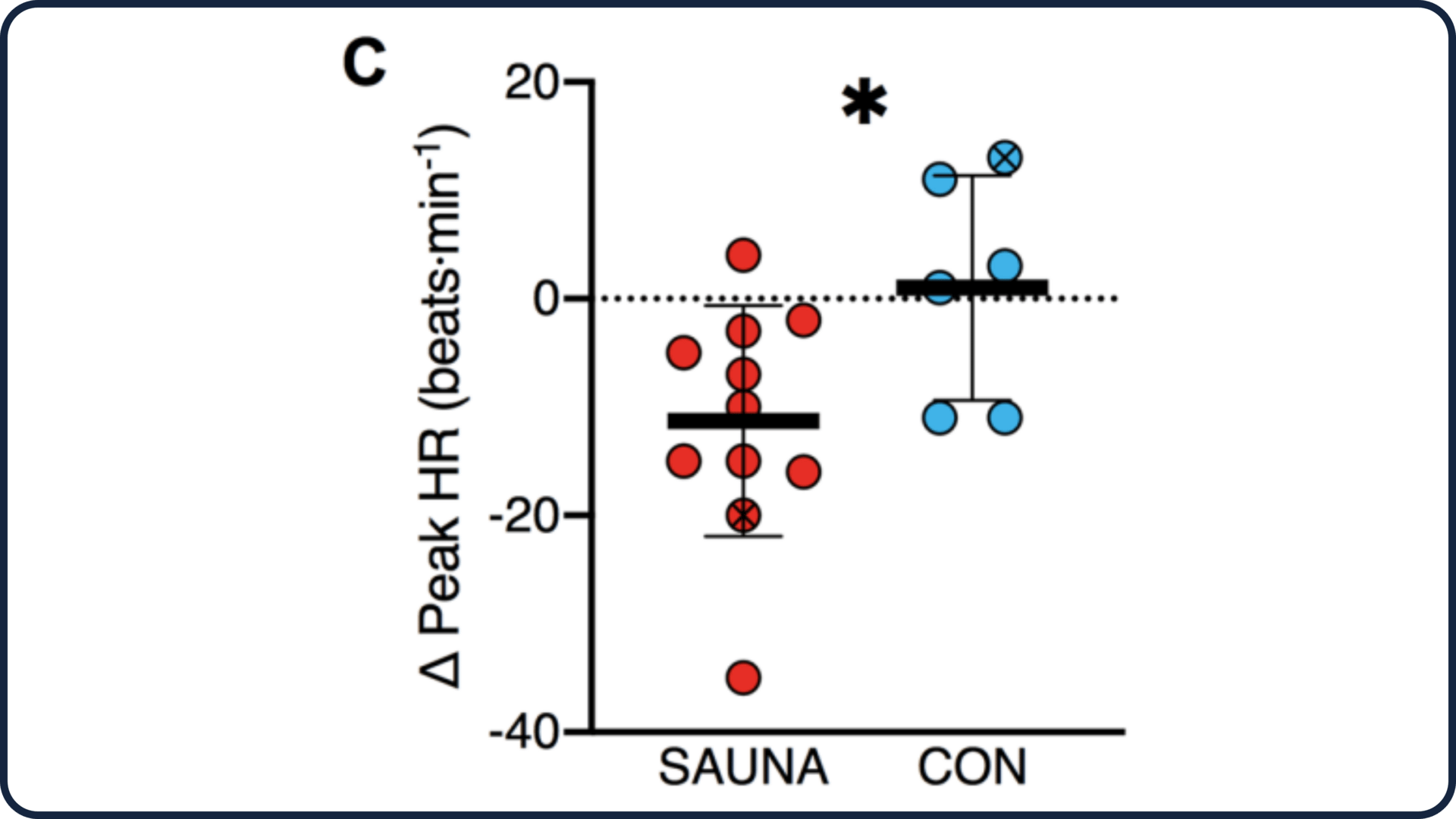
Figure 4c from the study: Change in peak heart rate
Core & Skin Temperature Regulation
Heat exposure reshaped how the body managed internal temperature. The sauna group experienced lower core (rectal) and skin temperatures during exercise, even when workload was fixed and environmental heat was high.
Lower core temperature delays central fatigue, reduces strain on the nervous system, and preserves muscle function. Lower skin temperature improves heat dissipation and reduces the thermal gradient the body must fight against during sustained effort. Together, these changes make endurance work feel physiologically “lighter,” even when output remains the same.
Sweat Gland Adaptation Without Dehydration
A particularly important, and often misunderstood, adaptation was the increase in sweat gland activation without an increase in total sweat loss. The sauna group activated significantly more sweat glands on the forearm, yet did not lose more fluid overall.
This reflects a shift toward efficiency, not excess. By distributing sweat over more glands, the body improves evaporative cooling without accelerating dehydration. For endurance athletes, this is a high-value adaptation: better heat dissipation without compromising hydration status.

Table 1 from the Study: Skin temperature responses, sweat gland activity, and sweat loss data
Training Load vs. Adaptive Signal
Crucially, none of these adaptations were driven by changes in training. Weekly mileage, session types, frequency, and perceived exertion were statistically indistinguishable between groups. The athletes did not train harder, they adapted better.
This distinction matters. Mechanical stress drives muscular and connective tissue strain. Thermal stress primarily targets cardiovascular, hematological, and thermoregulatory systems. By layering heat exposure after training, the athletes amplified adaptation without increasing orthopedic or neuromuscular load.
Practical Application for Lifters & Endurance Athletes
From a practical standpoint, the intervention was remarkably simple: ~30 minutes of sauna exposure after endurance sessions, about three times per week, for three weeks. The benefits appeared quickly and largely plateaued after this period, suggesting diminishing returns beyond short-term use.
This approach does not replace training, strength work, or conditioning. Instead, it acts as a multiplier, enhancing cardiovascular efficiency, thermoregulation, and fatigue resistance without adding mechanical stress. For lifters and endurance athletes managing recovery, joint health, or training volume, this distinction is critical.
The Bottom Line
Endurance gains are not dictated by workload alone. They are shaped by how efficiently the body adapts to stress. Post-exercise sauna bathing leverages heat as a powerful biological signal, improving cardiovascular efficiency, thermal control, and fatigue resistance without increasing training strain.
For athletes seeking smarter adaptations rather than simply harder sessions, heat exposure stands out as one of the most underutilized tools in performance physiology.
Reference
Intermittent post-exercise sauna bathing improves markers of exercise capacity in hot and temperate conditions in trained middle-distance runners
European Journal of Applied Physiology
DOI: 10.1007/s00421-020-04541-z